Artist Spotlight: Rose Paradise
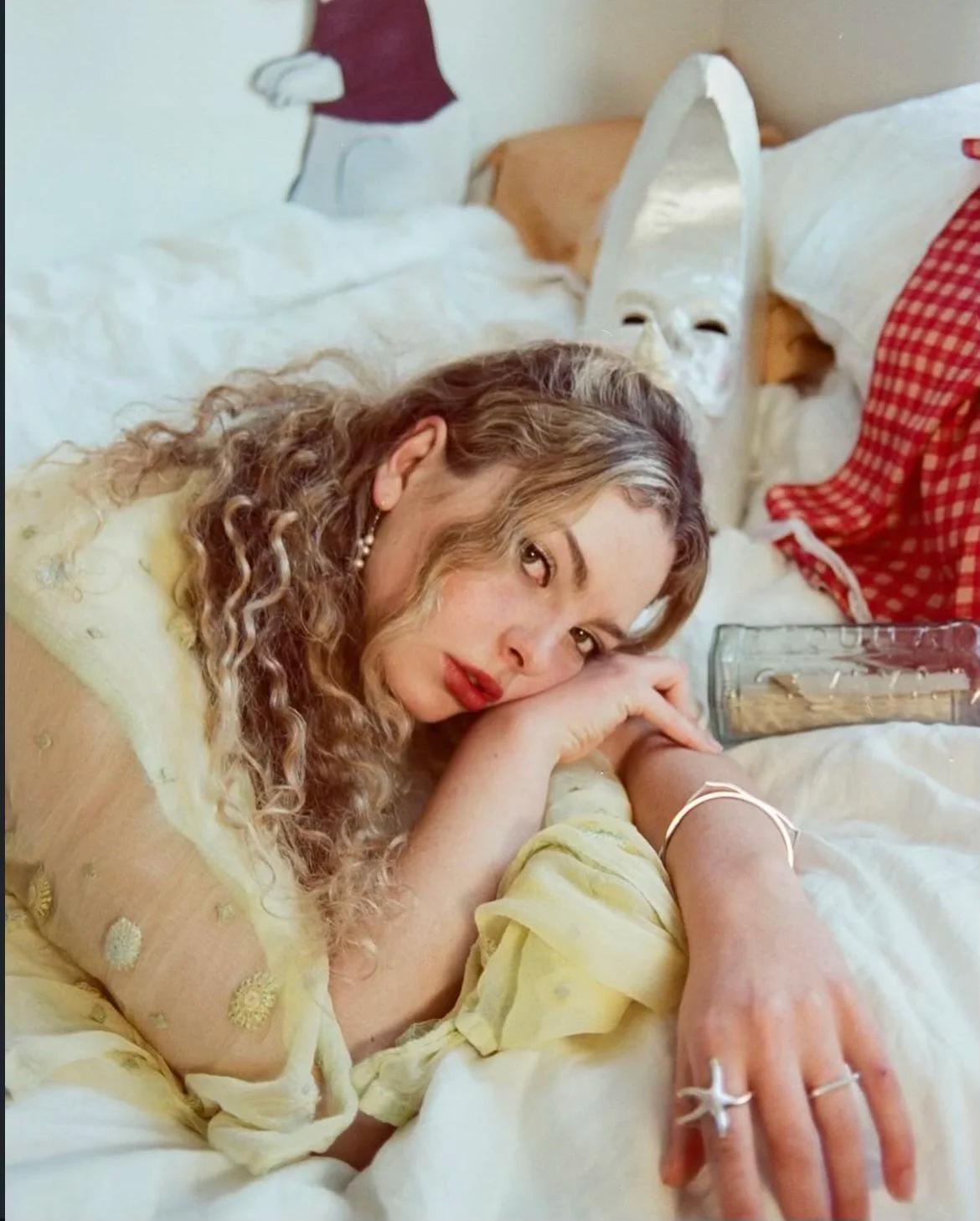
Brooklyn based singer-songwriter Rose Paradise talks one month of her debut album, Over The Hill, and shares what's to come throughout the remainder of 2025.
By: Spencyr Aronson
May 5th, 2025
Sounds by Spencyr: Hey Rose! I’m so glad we’re getting to sit down and chat today. Let’s jump right in, tell me a bit about yourself and your journey into music.
Rose Paradise: Hi! Of course. Growing up, I didn’t have musician parents, really. My mom loved to sing with her sister, so there was always music around, but it was never, “You’re going to take lessons.” I didn’t take any lessons until later, some voice lessons, but from the start, I just had the desire to perform.
I remember my music school teacher accompanied me on guitar, this was just regular public school, and there were a lot of after-school arts programs where I grew up. Arts were really supported, which was huge for me.
At one performance, my teacher messed up the chord changes for "American Girl" by Tom Petty, and I remember thinking, “I need to learn to accompany myself”. *Laughs*. I needed to be self-sufficient. So I started learning piano covers through YouTube tutorials, and I began playing every Tuesday at an open mic night at a local restaurant.
Impressive!
RP: Yeah, and from there I started writing songs. By the time I was 10, I put out my first album, and I just didn’t stop after that.
How does it feel looking back at how long you've been writing and creating?
RP: It’s funny, someone said to me last night, “You really take this seriously. This is what you do.” And I was like, “Yeah, kinda!” *Laughs*.
Obviously, I have a day job to support myself, but this is absolutely my life's passion. It’s been 14 years of writing music, which is crazy, but also not crazy. It feels like forever and also no time at all.
Totally. One thing I really wanted to ask about is how when you moved here, you started booking your own shows from the get-go. I think that’s so cool and brave. How did you build up the confidence to just jump right into that?
RP: It took a little time. I didn’t perform for a while after moving, but to be fair—it was 2020. Nothing was really open yet. Two things helped a lot: First, I interned at this place called GigFinesse, a booking agency for small venues in New York. My role was kind of like A&R, scouting small artists in New York to book them. I loved it, and it helped me understand the backend of booking. Second, I started putting my band together. Having really talented people standing behind you takes away a lot of the nerves.
Our first show was in the back room at Bowery Electric, it doesn’t even exist anymore, I don’t think, but it was so small, and we packed it out. That night, I thought, “Wow, I want to do this forever”.
After that, we didn’t stop booking shows. Performing is such an important thing for me, just as important as songwriting. Gigging has taught me so much about interacting with crowds, about what works and what doesn’t. And honestly, it’s selfish too: I just love playing the songs live.
It seems like you have a very close-knit relationship with your band. How did you all meet? I’d love to hear more about how you recorded the album live [as a group].
RP: I met three of them at school. Two others were from the Bay Area music scene where I used to play, and they came into the studio with me. The additional musicians, the pedal steel, fiddle, banjo, and cello players, were people I met in New York after everything else was recorded.
Also, Tom, who engineered the album with Ben, was someone I met at school too. Basically, four of the core people who helped create this record are people I’ve known for years. Co-producing a 12-track album with your best friends is just... so intense and so beautiful. I’m amazed at how it turned out, and that’s 100% a credit to them and their talent.
I’m sure it made it feel so much more personal and special, too, trusting each other’s tastes.
RP: Exactly. No one's bullshitting you when it's your real friends. *Laughs*.
It’s been around one month since your debut album Over The Hill was released. How has it felt seeing fan reactions [to the record]?
RP: Honestly, I feel a bit dissociated. That album has been the soundtrack of my last year. I had it on a private SoundCloud, and every time we had a new mix or master, I uploaded it. I listened obsessively, because I had to, as the producer. Making little changes, adjusting things. Now that it’s on Spotify and other platforms, it’s no longer just mine, it belongs to everyone else too. And that’s such a relief.
The release show really meant the most to me: seeing people sing along, getting to talk to fans face-to-face. It was more cathartic than anything that’s happened online. Social media reactions are amazing too, but it’s harder to measure the emotional impact there.
Getting to experience that personal connection to fans [in real life] must have felt so powerful.
RP: Definitely. And also, I’m a big believer in the slow burn. I’m unsigned, and I don’t necessarily want to be signed either. I love being independent. At the end of the day, it’s about hard work, and I’m patient.
You’ve been doing a residency at Desert Five Spot here in Brooklyn, right? How’s that been, especially now that the album’s out?
RP: I’ve loved it. Not because I’m playing the album, because I’ve been playing those songs forever. But I’ve been using the residency to play new material. I’ve actually written a whole new record already, and I’m really excited about it.
Desert Five has been great practice. Performing with just an acoustic setup, me and my guitar, has helped me feel more comfortable on stage than I’ve ever felt before.
When you look at the rest of your 2025, what’s on the horizon?
RP: By the time this interview comes out, I'll be back in California for some shows. Then hopefully going on tour, maybe opening for a bigger artist. Also, I’m planning to record a new project this summer, with a rollout probably in 2026.
I’ll still be based here, but I want to play more shows outside of New York too, and do more collaborations with other artists here.
I know you’ve mentioned a few artists already, but are there any up-and-comers you’re excited about that you’d like to shout out?
RP: Definitely! I’ve been listening to a lot of Cameron Winter lately, he’s amazing. My roommate put me on to him. Sid Simons, Hank Heaven, Patton Magee from The Nude Party, and Superblush (a.k.a. Huxley) who played fiddle on my record. There’s so much talent in this city.
Also, Emory plays drums, guitar, mandolin and sings [on Over The Hill], and she has her own project that’s incredible, everyone should check it out. My guitarist and roommate, Wurm, has a project he’s working on too. He’s such an incredible songwriter. He doesn’t have anything out yet, but keep an eye out!
Wrapping up here, I know storytelling and symbolism are huge parts of your work. How did that come together for Over The Hill?
RP: All the songs [on Over The Hill] were written over the past three years. I write a lot of music, but the ones on this album felt like they fit together thematically. The idea of home is a huge theme on the project, songs like “Year Of The Dog” and “To The Moon” came out of summers spent back home, flooded with nostalgia and questions about growing up and moving on.
“Tangerine” is about accepting change, the realization that we’re all so small, and that change is inevitable.
The phrase “Over the Hill” also carries a lot of personal meaning for me. growing up, to get anywhere (school, groceries, gas), you had to drive over a mountain. It was dangerous, but it also symbolized leaving the safe bubble of my small town. So, dedicating my debut album to that sense of home, and how it shaped me, felt really right.
I really love that. I feel like so many people our age can relate to that nostalgia and feeling of discombobulation when visiting home after growing up.
RP: Yes. Everyone has their own relationship with the idea of home, and I’m really grateful I got to explore mine through this record. When I look at it now, it feels insane, because I really went over the hill. Whenever I go home, there’s a sensory feeling I get driving home over that mountain.
Last question for you. If you could give one piece of advice to artists trying to get their music out there today, what would it be?
RP: Honestly, I don't know the “right” way to promote online. It’s such a weird world. But I do know people crave authenticity. So, my advice would be: just be yourself. And if it fits your music, get a group of friends together and play live shows. I think live music is one of the most beautiful gifts that we have, and performing live teaches you so much about who you are as an artist. So if you’re able to, definitely do it.
Perfect point to end on. Thanks Rose!
RP: Thank you!