Artist Spotlight: Aubory Bugg
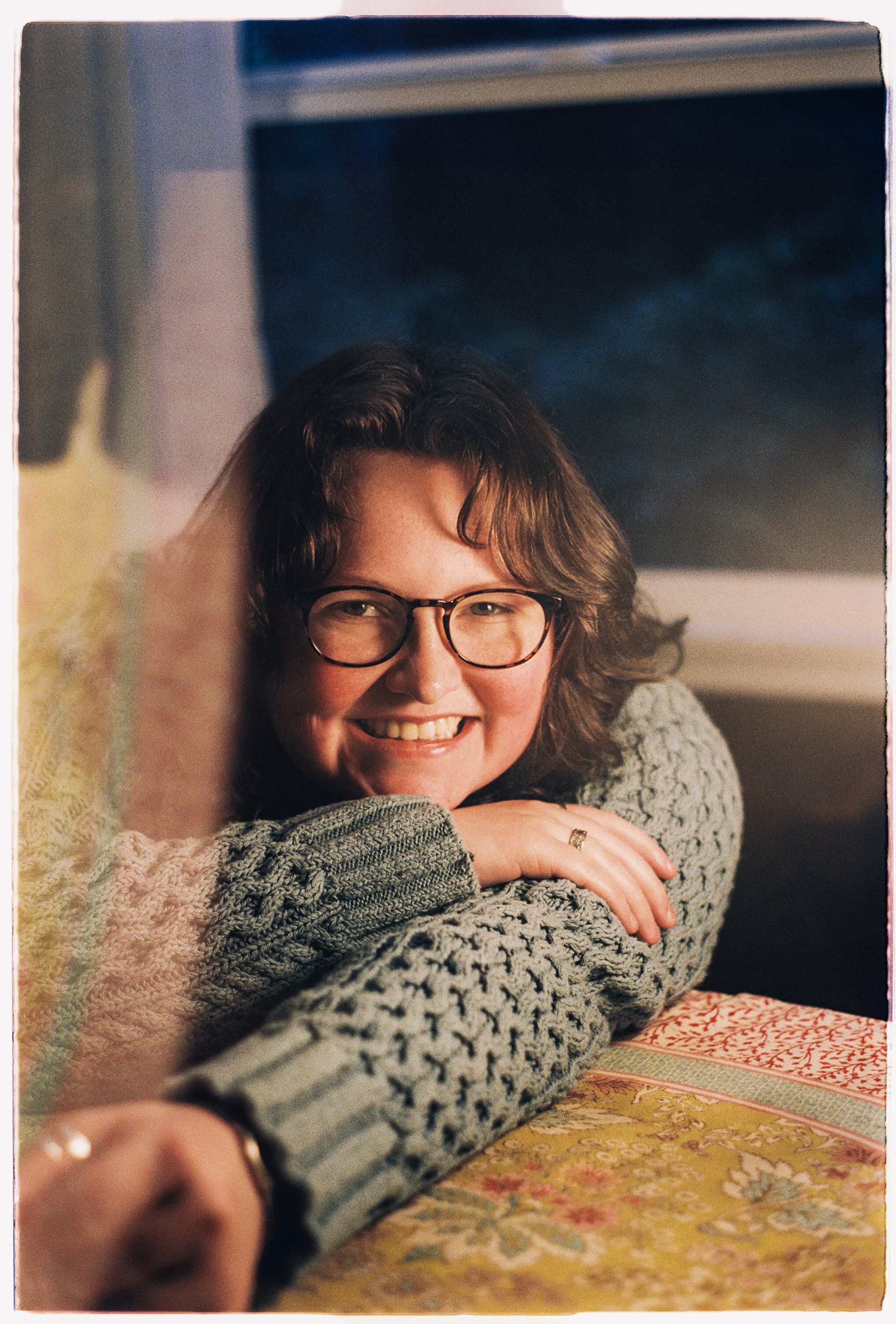
On her debut album, ‘i think i had something once,’ Aubory Bugg finds meaning in the people, places and pieces of herself she’s lost along the way.
By: Spencyr Aronson
September 14th, 2026
Sounds by Spencyr: Hi Aubory! Let's get right into it. Your new album's title track is about realizing how much of your life is made up of things you didn't think you'd lose. What did you have to lose, or believe you had lost, before you could make this record?
Aubory Bugg: A lot of this record is about a breakup I went through in 2025. I've always been a person who needs to be friends with someone before I date them, and so I think losing not only that relationship but that friendship was really pivotal in the writing of this record.
There is a song about growing up and losing your youth and there's another one about the death of my uncle Joe, and I think I had to grow up a little before I could even begin to write this record. I couldn't have written these songs any earlier than I did or they'd be completely different.
You grew up in a blue-collar steel mill town where your family literally traded home repairs for piano lessons. When did you first understand the extent of what your family had sacrificed to make music possible for you?
AB: I think in middle school when my parents were both working two jobs so I could afford to go to band camp in the summer. My mom would work her 9 to 5 as a dental assistant and then on weekends she would hand out samples at Sam's Club, and my dad would take on every side project he could so that I could do everything I wanted to. They gave up so much of their time, energy and youth so I didn't miss out.
Growing up queer in a conservative town, you've described feeling like you weren't meant to stay. How much of this album is about leaving that place, and how much of it is still about missing it?
AB: What's so funny I think is that not a lot of this record is about missing my hometown. I had *just* moved to Nashville when I wrote the biggest chunk of it, so the 'missing it' factor hadn't really hit yet, I guess. A lot of what I'm writing now for record two is about leaving, missing my parents and my friends back home. Not a lot of ITIHSO, though.
I grew up in the South, so I understand the feeling you may be alluding to. By 13, you were performing in coffeehouses. What do you recognize in that younger version of yourself, and what do you think would surprise her most about your life now?
AB: Younger me was *so* ambitious, in a way that I didn't really understand at the time, and I think that I'm incredibly lucky to have not grown out of that. I think she would just be shocked that we did it at all. I think she'd be so proud that we left Granite City and that we do music for a living, but I really think she'd be like "wow, thank god. I wasn't sure we'd ever actually do it."
For a while, you posted a cover of a different song every day, which is how I found your music! What did you learn from temporarily living inside so many other artists' songs that changed the way you approached your own voice?
AB: I think doing the cover a day was the best way I could've understood how I want my voice to be used in a song. I remember at the time I was confident in my vocal ability, but I never knew when to push and when to hold back. I think that stepping into other genres and styles really helped me hone in [on] my instincts.
That makes total sense. Your sound has been compared to artists ranging from Joni Mitchell to Phoebe Bridgers. Is there a musical reference that might surprise people but had a meaningful influence on this album?
AB: We actually referenced a lot of singer-songwriter pop from the late nineties and early 2000s. I try to stay away from broad stroke "this should sound like this person" references, but there was a shocking amount of Sheryl Crow listening happening at the time. I also referenced this alt-rock band called Born Without Bones a lot!
Sheryl Crow is amazing. Living in Nashville, you are now surrounded by a community of queer artists and collaborators. How has finding that community changed the way you create compared with writing from a place where belonging felt more complicated?
AB: Before I lived here [in Nashville], I wrote a lot about feeling isolated and feeling like your life is just happening to you. Whereas now, I think I have the support behind me to be honest about feelings that are a little deeper and more nuanced. I write about my childhood and loss and breakups, but I feel a responsibility to be as honest as I can now that I'm surrounded by such incredible and vulnerable artists and their art.
The album remarkably moves between romantic loss, childhood memories, identity, and the death of a loved one. Did writing about those different forms of grief reveal anything they have in common?
AB: I think losing something or someone in any way is a similar pain, just at different intensities and on different timelines. In my experience, losing a loved one is such an immediate loss that hits you really quickly. You can point to it soon after it happens and say, “I’m heartbroken because I’ll never see them again,” or, “This hurts because I didn’t say or do this, and now I never can,” and that feeling is so overwhelming. But people are right when they say the rest of your life grows around your grief and makes it feel smaller over time.
I think, though, that the end of a romantic or even platonic relationship is back-loaded. You feel the rejection and denial for a while before the sadness kicks in. It’s difficult when the person you miss is still alive and able to be in your life, but they just don’t want to. It’s still grief all the same, I think.
In one of my favorite tracks on the record, "the one you want to lose," there is a painful shift from being wanted to suddenly being left behind. How do you write about rejection without allowing someone else's decision to define your value?
AB: Oh, I let it define my value for a long while, actually. I think to be discarded is always going to mess with your valuation of yourself. It’s really difficult to separate your worth from someone’s actions when it feels like there’s no clear reason for them to think or act the way they do.
Over time, though, I've [found] calm in the fact that I didn't change and I always saw the best in this person, even when I had no reason to. It wasn't my fault that they took that for granted.
Thanks so much for your honesty. I've found myself in similar situations before, and it never gets easier! What is one lyric on the album that feels almost uncomfortably honest to share with the world?
AB: The second verse of "still want you to" is as follows:
"take it all out on me // if you could only see the way i // tell myself I believe // i know you and you love me // and you use me but that's something"
And I think this whole song, but mainly that verse, is some of the most pathetic, down-bad writing I have ever done. It's incredibly honest, but more so, it's embarrassing to share it now that I'm so far removed from that place and have a shred of self-respect.
"farewell to dreaming" is a striking title on an album arriving just as your career is taking off. What themes does that song contain?
AB: It's actually a little lyrical callback to this line: "It's the same old dreams I sleep for, what a life we could've had." "farewell to dreaming" is about surrendering the hope for some sort of fairytale ending after a hard breakup. To me, it's a "Hey, wouldn't that have been something?" or an "In another life" kind of song.
The final track is called "sometimes (i love you)." Why did that song feel like the right place to leave the listener, and what does the word "sometimes" hold that a more straightforward declaration would not?
AB: So, "sometimes (i love you)" is the second-to-last song I wrote during the record-making process, and it almost didn't make it onto the record. I posted it on the internet, and people LOVED it, so I brought it to Jon Class, who wrote and produced a lot of the record with me, and we gave it this huge outro that just made it obvious it had to be the last song on the record.
Also, the last lyrics are, "after this one I'm not writing you songs, what's the use anymore," and I thought that was a good little bow to tie up the record with (even if it isn't incredibly accurate). I think the "sometimes" of it all kind of implies an acceptance in a way that just saying "i love you" wouldn't. To me, it's like saying, "Hey, bad things happened and we don't speak, but I think about you and us fondly, and I hope you're okay, and I hope you have a great life." And that doesn't have to be a bad thing to carry for however long I carry it.
Moving forward a bit, you're performing at AmericanaFest on a bill with artists like Houndmouth and Shakey Graves for Dualtone's 25th anniversary. What does it feel like to be the newest name on that stage?
AB: It's such an incredible honor to share the stage with these artists I've been listening to for such a long time. It's also such a huge bar to meet, but it's definitely helped me hone my live chops that much further.
One last question for you. When listeners reach the end of ‘i think i had something once,’ what do you hope they reconsider about the people, places, or versions of themselves they believe they have lost?
AB: Not to be too aloof, but I think everybody should take away what they need from it.
I definitely, on the other side of making this record, hug my friends and family a little tighter when I see them, and I try to make sure they all know just how grateful I am to have them. I'd LOVE for people to be a little more earnest with their loved ones after listening. But mainly, I just want this record to be a solace for anybody going through a breakup, moving away from home, or dealing with the loss of a loved one. I want it to be where people go when they want to feel understood.