10 Questions with Valley Boy
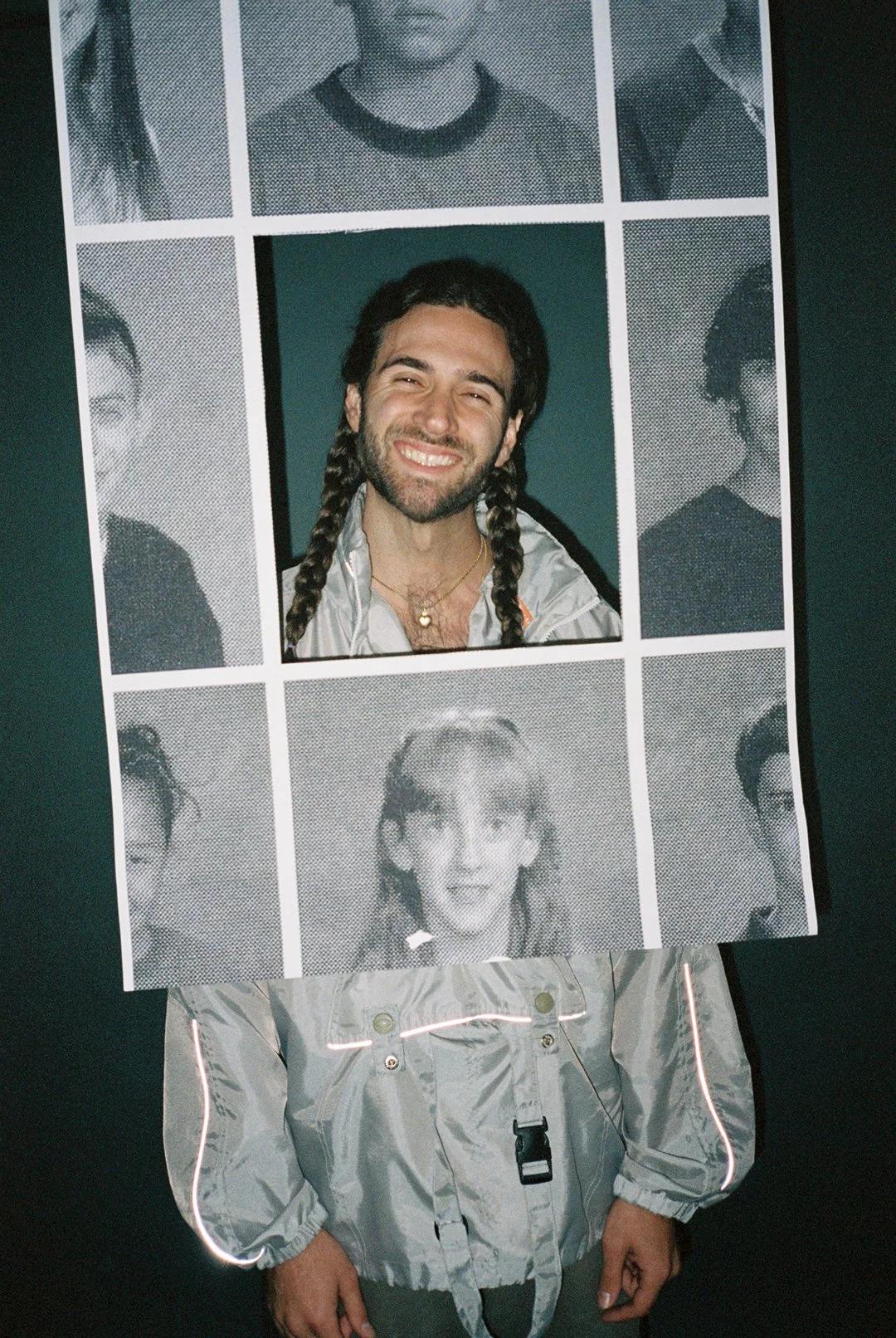
Valley Boy (James Alan Ghaleb) is a singer-songwriter and producer from the San Fernando Valley. He sits down to chat about “Happy All The Time”, the first single from his upcoming debut album.
By: Spencyr Aronson
April 6th, 2025
Sounds by Spencyr: Hi James! Thanks for taking the time to answer some of my questions today.
"Happy All The Time" is the first single from your upcoming debut album. Walk me through the track! What was the inspiration behind it? When and where did you first write and record it? How does it set the tone for the rest of the album?
Valley Boy: Hi Spencyr! Where to start?! I wish I could say that the song wasn’t autobiographical, but the truth is that I grew up in an unhappy home, which has made it difficult for me to value happiness. This struggle has sometimes made me a challenging romantic partner. Part of the concept for my upcoming album, Children Of Divorce, was to look back at my own musical influences and find artists who were also children of divorce, paying tribute to their music.
While I often draw inspiration from Jeff Buckley, for this song in particular, I was tapping into the energy of Kurt Cobain. I first wrote the song after returning from my first EU and UK tour opening for Jeremy Zucker. At that time, I had just gotten married, and my wife was reacing a breaking point due to my persistent depression. So, the song began as an apology and an acknowledgment of what I put her through. Much of the album will relate specific stories of fellow children of divorce I’ve known and loved (friends, family, and partners), but this song represents my experience as an adult struggling with the emotional baggage I inherited in my youth.
I chose it as the first single because it felt right to introduce people to where I’m at now before delving into the rest of my history. Also, I find this song kind of fun, and I wanted to start the album with some real energy before exploring more tender and painful moments. Like the rest of the album, “Happy All The Time” was recorded and produced alongside my two best friends, Michael Coleman and Kevin Farzad, in Kevin’s studio.
You've written songs for major artists like Troye Sivan, Lukas Graham, and Sabrina Carpenter. How does your approach to songwriting change when it's for yourself versus for another artist?
VB: The change is huge. When I’m in the room writing with other artists for their projects, I become a real professional: focused, respectful, and positive about helping to bring their vision to life. I often get a clear sense of their identity, which simplifies the writing process for me. Artists like Sabrina, Troye, Lukas, Chezile, and Jeremy are such powerhouse writers themselves that it becomes a real team effort. All of that changes when I’m writing for myself! I usually write alone, chaotically, at all hours of the day or night, sometimes taking years to finish a single song because left to my own devices, I can be particularly difficult to wrangle.
Also, remember that crystal-clear sense of identity I feel for the artists I collaborate with? I don’t have that when writing for myself! Maybe it’s the disorienting effect of switching styles and genres professionally, or maybe it’s something everyone experiences because we’re too close to ourselves to see clearly, but I often go through periods of having no idea who I am or what I can sing. I did my best to write and record this record quickly to help cope with that feeling.
Going off of that, what was it like transitioning from writing for others to being the artist in the spotlight? Did you face any challenges in finding your own voice as Valley Boy?
VB: The transition was very strange. I was drawn to music first as a performer and artist. I started writing songs around age 12 (when my dad first left), and by high school, I was forming bands and playing shows around the valley and the Sunset Strip. Being on stage always felt very natural and cathartic for me. I stumbled into songwriting by accident. I was approached by two very established pop writers/producers, Savan Kotecha and Max Martin (names I didn’t know at the time), who were interested in creating a boy band and hoped I would be the lead singer. I turned down the offer but got to know them well enough that they offered to sign me as a songwriter instead! I was suddenly surrounded by some of the largest pop artists in the world, and for years, I shifted my attention entirely away from performing to figuring out how to make a living as a songwriter.
Re-emerging as an artist was a shock to my system. I had spent years enjoying some success with other artists and hearing my songs play on top 40 radio, with peers disappointed when a song didn’t go #1. When I finally emerged as the indie nerd artist that I am, it was strange and difficult to deal with the reality that my own music wouldn’t suddenly achieve that same level of reach. In finding my voice as Valley Boy, I started off writing songs that I could never write for or with another artist because they were perhaps too personal or autobiographical. I’ve loosened that standard a bit through my previous releases, but generally, for this album in particular, I lead with that sensibility.
So interesting, thank you for sharing that! Your background as a producer must influence your songwriting process. How much do you think production shapes the sound and mood of your songs?
VB: Production shapes so much, and I wish it didn’t. It might just be part of my nature that I’m more of a songwriter than a producer, but I wish there was only one way to produce a song.
The nearly infinite palette of production styles can be crippling, and there have been many times I’ve felt that a song is so perfect and precious, yet the production process introduces difficulty. I find much more joy and catharsis in performing songs live than in recording them in a studio. For this record, since my co-producers Mike and Kevin know how my demons tend to arrive right around the time we start “producing” a song, we recorded the songs by working backward from how they would function in a live performance setting, making adjustments only when absolutely necessary.
Switching gears a bit, coming from an Egyptian-American background, how has your heritage influenced your music, both lyrically and sonically?
VB: Fun question! It’s a bit of a nature vs. nurture story here. Though I’m Egyptian, I grew up with nearly no contact with Egyptian culture. I don’t think I processed that I was African/Middle Eastern (it’s hard to tell with Egypt!) until after 9/11 when suddenly my last name became an issue. Yet, despite my lack of contact with Egyptian culture, I find myself drawn to it through my singing style. More and more, I sing the kinds of melismatic vocal melodies you’d hear in traditional Egyptian music. So maybe it’s in my genes somehow?
That totally makes sense. Who are some of your favorite smaller artists you’d like readers to discover?
VB: Delacey, Daffo, Abby Sage, Scott James, Toledo, Gabriel Jacoby, Wishy, Cameron Winter, Mei Semones, MJ Lenderman, Nick Hakim, Hether, Outside Air, Palo Alto… there are so many artists I’m forgetting, and many more I know I’ll love but haven’t heard yet.
Great picks. Later this month you’ll be opening for LAUREL on tour. Congratulations on that opportunity! What are you most excited about for that run, and how do you think your live performances will connect with fans?
VB: Thank you! I’m deeply honored that she’s giving me the opportunity to open each night for her and meet her incredible fans. I genuinely feel my best when I’m performing music for people, so I’m excited just to have the chance to play for people who love music every night. I’ll just be singing and playing guitar, no tricks. I truly have no idea if anything will connect, but I give each performance everything I have in me as honestly as I can, and hopefully, the audience can find a way to connect emotionally. Speaking of honesty, I’m a little nervous for the NYC show. I had my first bad show ever there in 2023, and it still feels a little eerie!
Speaking of tour, what’s one song from your debut album that you’re especially excited for your fans to hear live? Why that particular track?
VB: I’m really excited for them to hear “Happy All The Time” live because it’s such a fun belter. I get to really let loose by the end, and that’s a treat because it’s not often in regular life that people will let you yell for a minute and then clap at the end!
Beyond that, I’ll be performing unreleased songs from the album on this tour, and I’m excited for all of them. I have a tender song for my mom, a fun one about my first girlfriend in middle school (to clarify, we were both in middle school at the time), and an absolutely soul-crushing song about a family member who died in a drunk driving accident. The last one feels more like a compulsion to play than excitement.
Just a few more questions for you. With the debut album on the way and the tour kicking off in April, what can fans expect from you in 2025 beyond these milestones?
VB: Fans can expect more shows and tours (hopefully starting in May and more thereafter), more live videos from that same defunct (haunted?) auto body shop, and a very fun series I’ve been filming in which I aggressively interview fellow children of divorce. I’m truly excited for people to see that because it’s become this fun and comedic foil to what is generally a heavy topic and album of music.
Lastly, what’s one thing you hope listeners take away from your debut album once it’s out?
VB: I hope this album is somehow healing for people to listen to, as it was healing for me to make it. I’ve always wanted to create an album on this topic, and as I look at the (nearly) finished product, I can’t help but feel there are so many stories and facets of being a child of divorce that I’ve left out entirely. I hope this album serves as a good starting point for anyone who needs to process their own feelings on the subject.